NEET paper leak controversy sparks nationwide outrage as students demand justice, transparency, and accountability. Read how the alleged exam leak is affecting millions of medical aspirants across India.
Could a Single Paper Leak Destroy the Future of 24 Lakh Students?
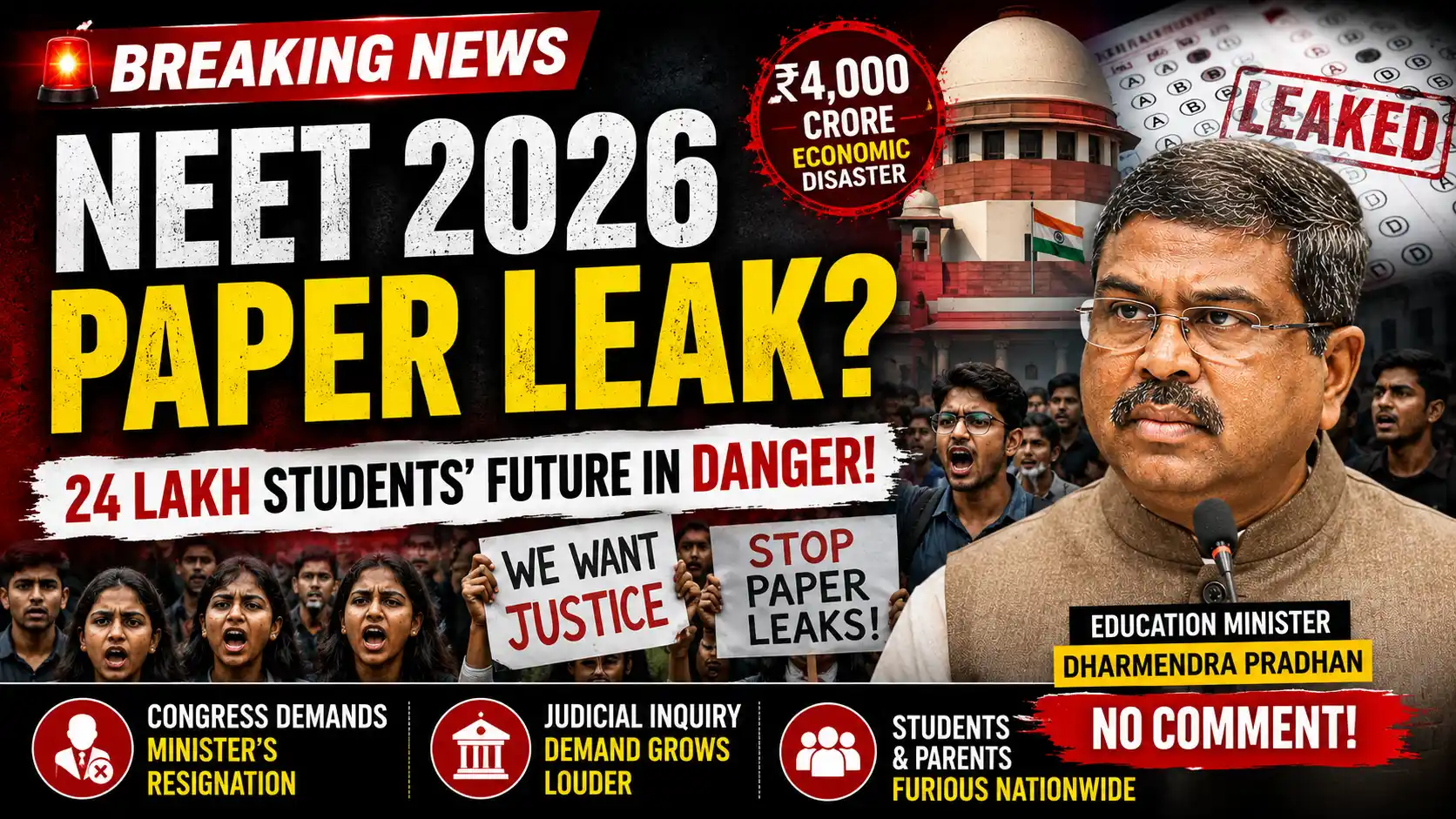
The NEET-UG paper leak controversy has created massive anger and fear among students and parents across India. More than 24 lakh students prepared for one of the country’s toughest medical entrance exams, but allegations of a paper leak have now raised serious questions about the fairness of the system.
Many students spent years studying day and night, attending coaching classes, and sacrificing personal time to secure a medical seat. Now, thousands fear that their hard work could go to waste because of failures in exam security.
The issue has become more than just an education scandal. Students and parents say it is a betrayal of trust by the system responsible for protecting their future.
NEET Exam Controversy Turns Into a Massive Economic Issue
The NEET examination system also involves huge financial investments. Every year, the government earns thousands of crores through NEET registration fees. At the same time, families spend large amounts of money on coaching institutes, books, travel, and hostel expenses.
Experts estimate that the overall “exam economy” connected to NEET is worth more than ₹50,000 crore annually. Because of this, the paper leak controversy is being called not only an education crisis but also a major economic disaster affecting middle-class families across the country.
Why Are Questions Being Raised Against the Government?
Opposition parties, including Congress, have demanded accountability and a proper investigation into the alleged leak. Many students are also questioning why strict action is quickly taken against students or doctors for mistakes, while top officials rarely face consequences in large exam controversies.
Demands for a judicial or CBI inquiry are increasing as students seek transparency and justice. The main concern remains simple: students want a fair examination system they can trust.